About All Tours Moon Valley ToursBaltinache Lagoons ToursAstronomical ToursFrom San Pedro de AtacamaPrivate ToursUyuni Salt Flats Tours3 Day ToursGeyser del Tatio ToursPiedras Rojas & Lagoons Tours Directions Hours & Fees
Find Tours 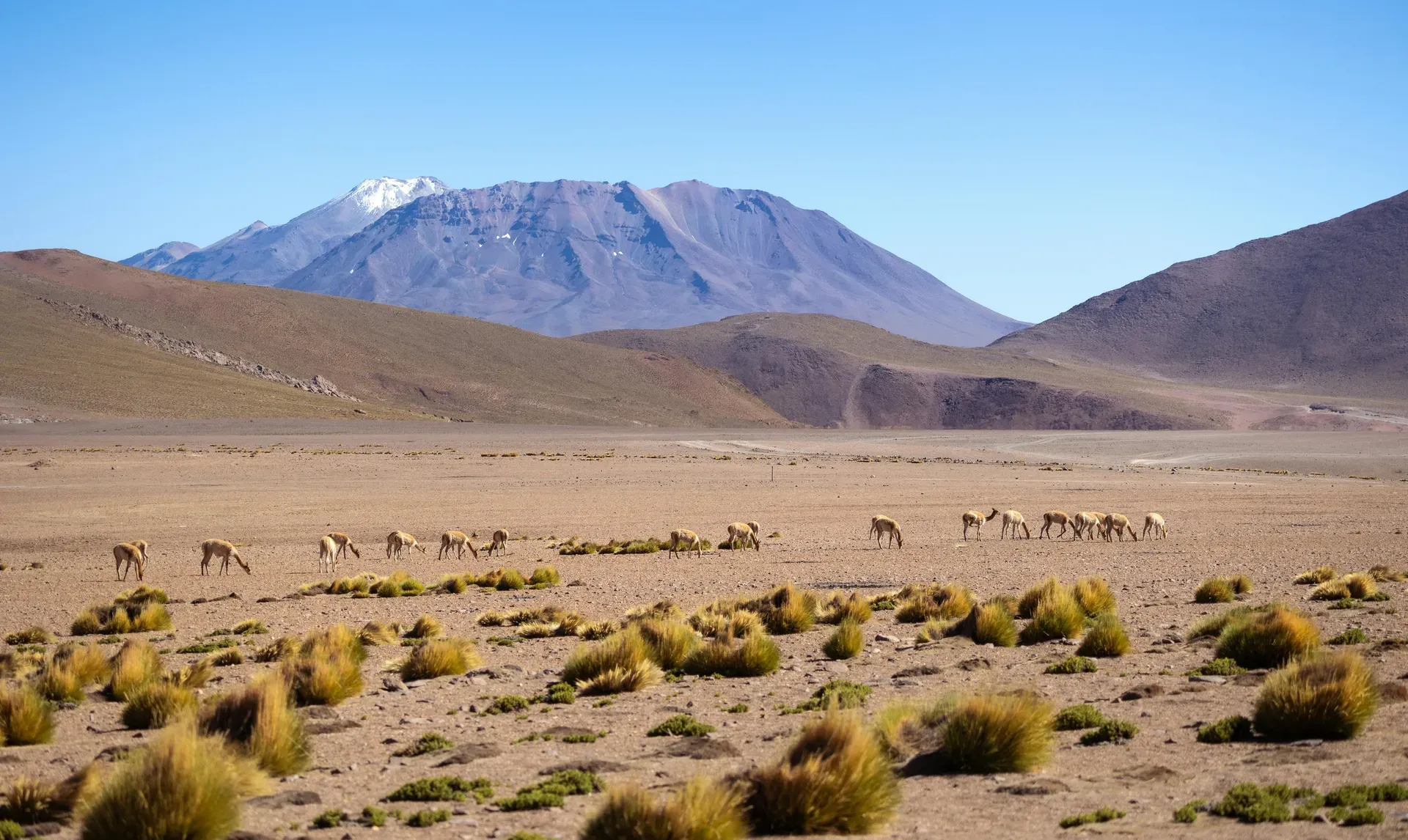
Receiving an average of just 1 mm of annual rainfall, the Atacama Desert is the driest non-polar place on Earth. This 105,000-square-kilometer plateau features terrain so similar to Mars that NASA uses its felsic lava flows and salt flats to test planetary rovers.
Find Guided ToursThe Atacama Desert is a 1,600-kilometer-long plateau located primarily in northern Chile's Antofagasta region. Covering 105,000 square kilometers, it is the driest non-polar location on Earth, recording an average annual rainfall of just 1 millimeter. Elevations vary drastically, rising from sea level at the Pacific coast to 2,400 meters at San Pedro de Atacama, and exceeding 4,300 meters at the El Tatio Geysers. The landscape features stony terrain, sand dunes, felsic lava flows, and the 3,000-square-kilometer Salar de Atacama.
This extreme aridity stems from a two-sided rain shadow created by the Andes and the Chilean Coast Range, combined with the cooling effects of the Humboldt Current. These harsh conditions produce topographies so similar to Mars that NASA uses the Yungay Station to test planetary rovers. The desert is also a global center for astronomy. With over 300 clear nights per year and minimal light pollution, it hosts powerful facilities like the ALMA Observatory.
Despite the severe climate, human presence in the Atacama dates back millennia. The arid conditions preserved the world's oldest artificially mummified remains, the Chinchorro mummies, which date to 7,020 BCE and predate Egyptian mummies by thousands of years. By 500 BCE, the Atacameño (Lican Antai) people had developed advanced terrace farming and irrigation systems to survive the region.
In the late 19th century, the desert's mineral deposits sparked the War of the Pacific (1879–1883). Chile, Bolivia, and Peru fought for control over valuable sodium nitrate, or saltpeter. Following Chile's victory, a massive mining boom swept the region until the 1930s. The industry eventually collapsed, leaving behind numerous ghost towns like Humberstone, which now stands as a UNESCO World Heritage site.
Discover the full history and cultural significance on our About page.
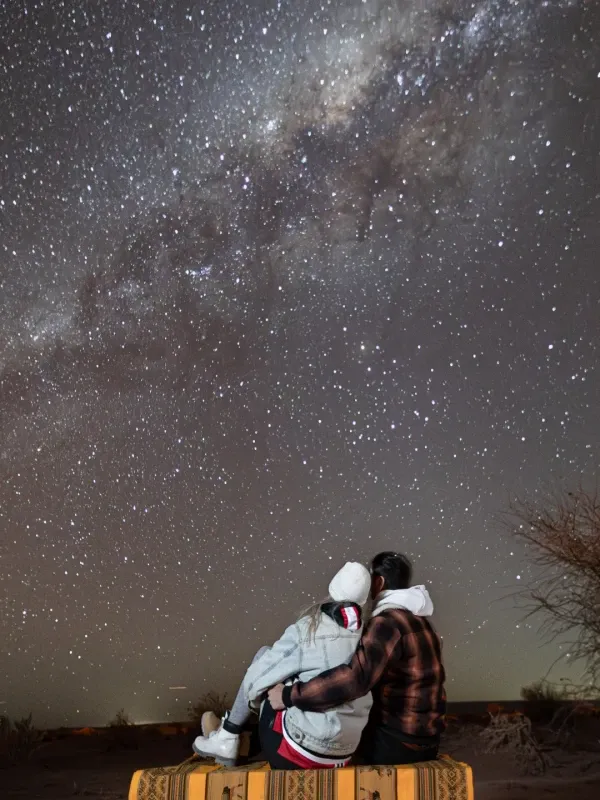
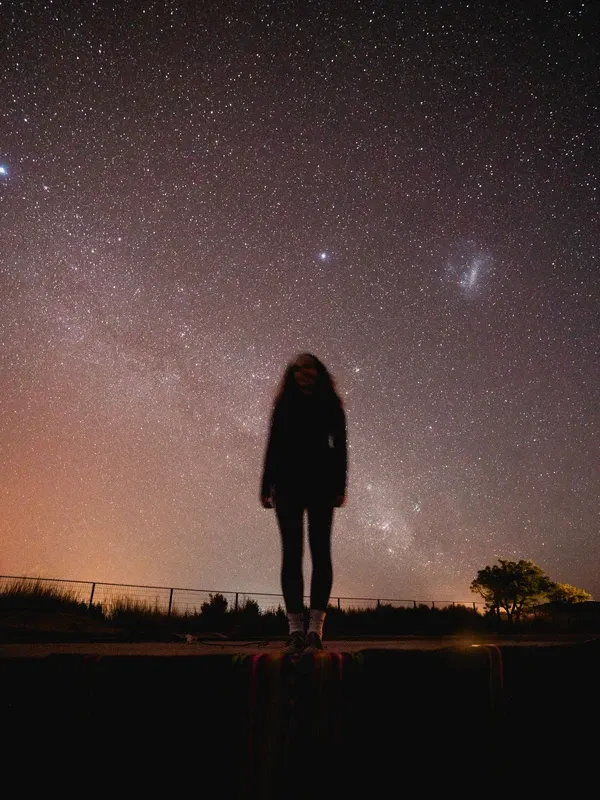
The region boasts over 300 clear nights per year and minimal light pollution. Join professional astronomers using high-powered telescopes to observe the sky. Avoid planning around a full moon, as moonlight washes out visibility. You can also book weekend tours of the massive ALMA Observatory months in advance.
Watch steam columns erupt into the freezing morning air at an elevation of 4,320 meters. Temperatures routinely drop to -15°C before dawn, requiring heavy thermal layers. Acclimatize in San Pedro for 48 hours before visiting this high-altitude site to prevent altitude sickness from the thin air.
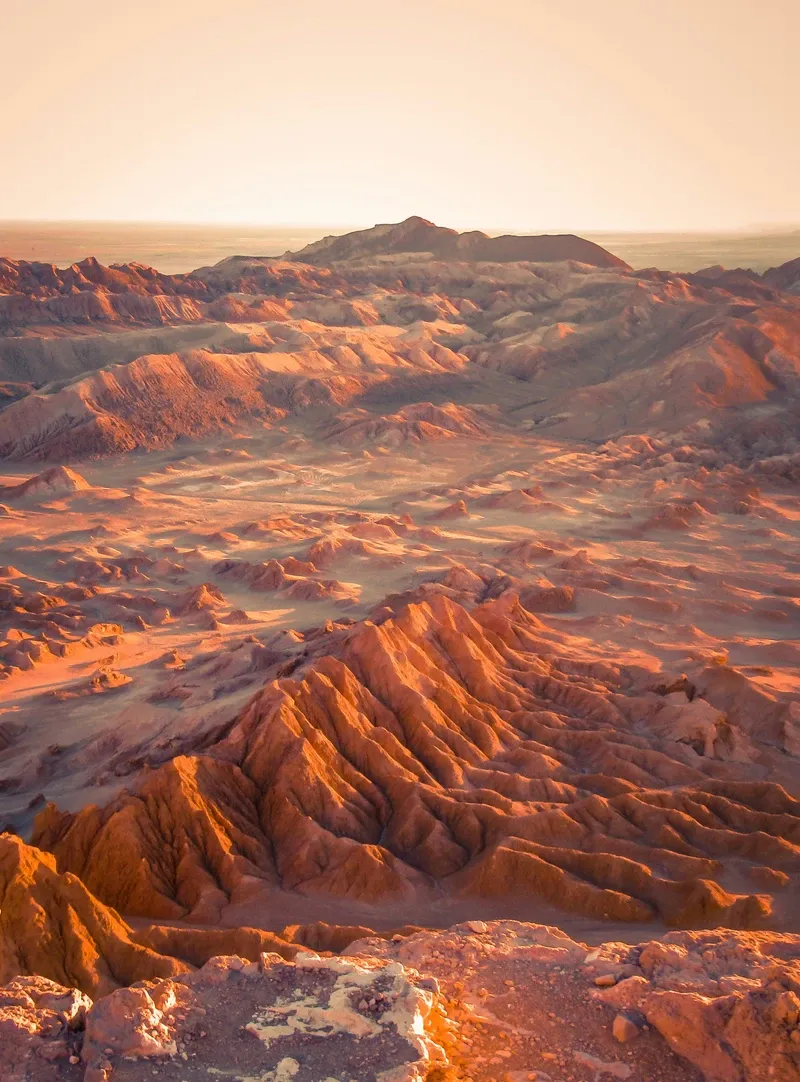
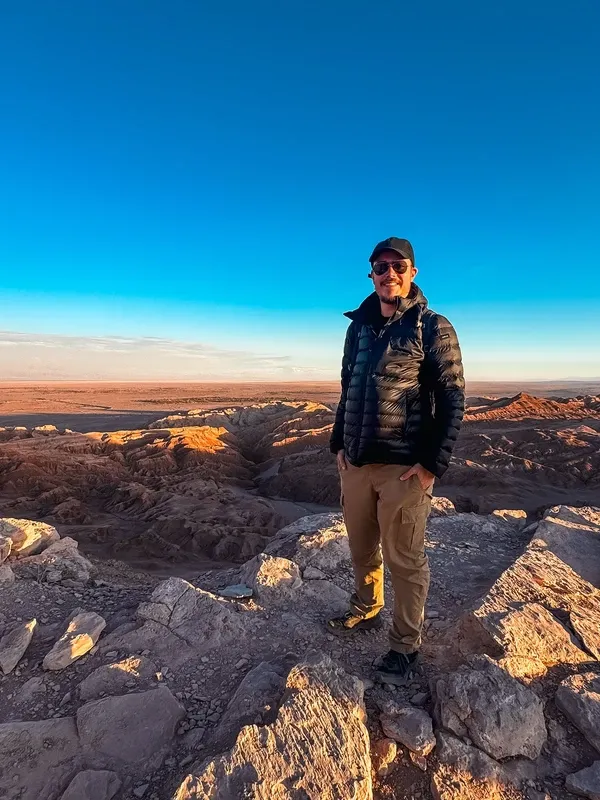
Watch the salt-crusted mountains of the Cordillera de la Sal turn deep red and purple as daylight fades. This otherworldly terrain so closely resembles Mars that NASA uses it to test planetary rovers. Entry costs 10,800 CLP, and advance online booking is mandatory to access the protected trails.
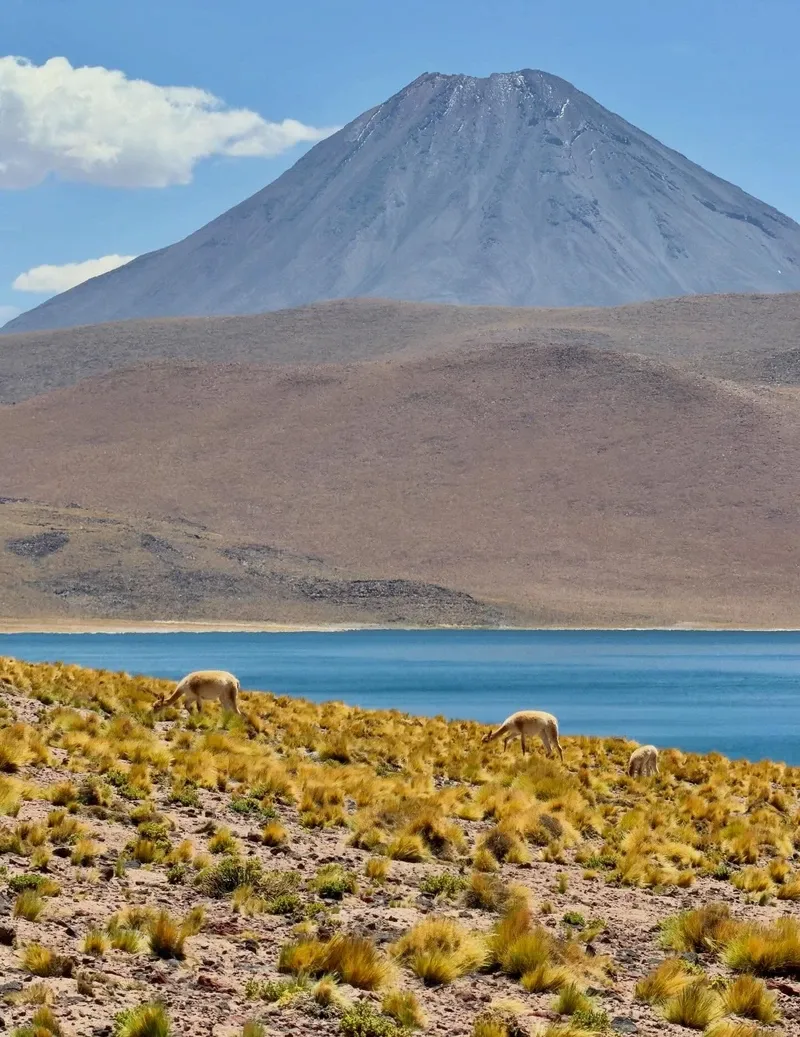
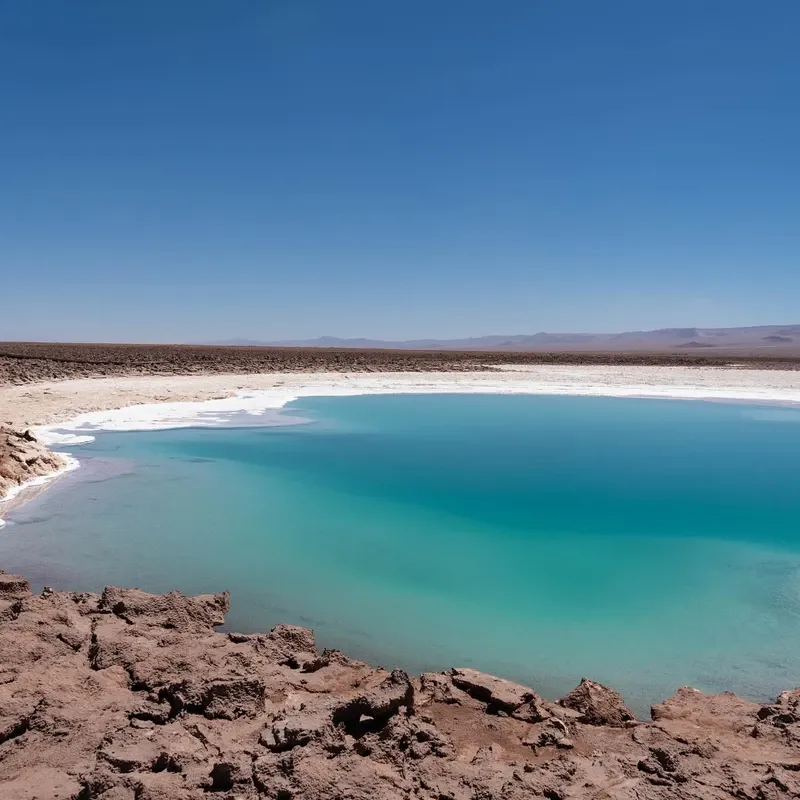
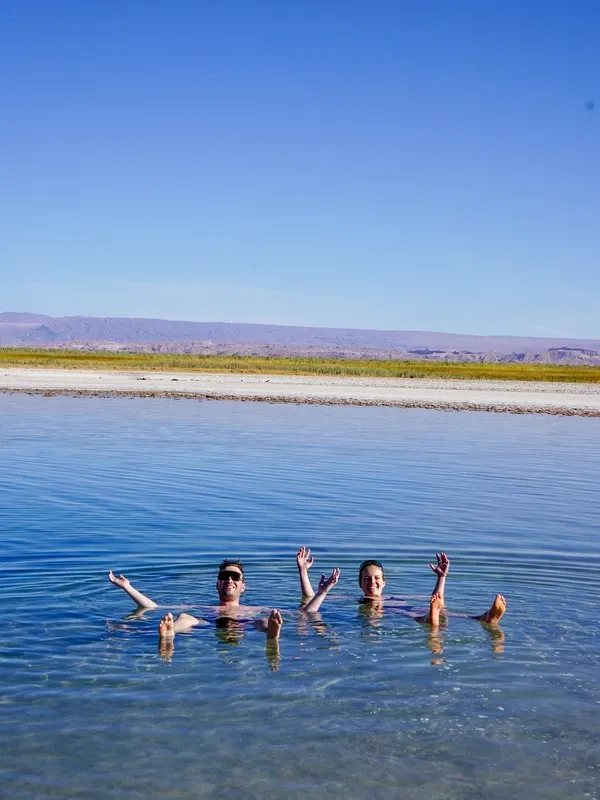
Float effortlessly in the hypersaline waters of Laguna Cejar, which mimic the density of the Dead Sea. At the 3,000-square-kilometer Salar de Atacama, visit Chaxa Lagoon to observe three flamingo species: Andean, Chilean, and James. Wear polarized sunglasses to block the intense glare from the salt crust.
Hand-picked tours with free cancellation and verified reviews
 Free Cancellation
  Free Cancellation
  Free Cancellation 10h
  Free Cancellation 4h 30min
  Free Cancellation 12h
  Free Cancellation 2h 30min
  Free Cancellation 2h 30min
  Free Cancellation 4h
 The ideal time to visit the Atacama Desert is between March and May, or September and November. These periods provide mild temperatures and fewer crowds, avoiding the disruptive flash floods of the early-year months.
This period provides mild temperatures and fewer crowds. Visitors can comfortably handle high-altitude excursions, though technical layering remains necessary for extreme temperature shifts between 30°C days and freezing nights.
January and February trigger the 'Altiplanic Winter' phenomenon. Moisture from the Amazon reaches the desert, creating a high risk of unexpected heavy rains, intense thunderstorms, and sudden road closures.
Autumn is optimal for desert exploration, characterized by mild temperatures and reduced tourist numbers. Clear skies allow for excellent stargazing, free from the severe weather disruptions seen earlier in the year.
Extreme aridity persists with virtually no rainfall, maintaining the region's 300-plus clear nights. However, visitors face severe temperature drops, requiring heavy thermal jackets for nights that can reach -15°C.
Operating hours vary depending on the specific site within the desert region. Valle de la Luna is open from 08:30 to 16:00 for vehicles, while bicycle access is restricted to 08:00 to 11:00. Laguna Chaxa operates from 07:00 to 18:00. El Tatio Geysers open early, running from 06:00 to 17:00.
| Category | Price |
|---|---|
| Valle de la Luna | 10,800 CLP |
| Laguna Chaxa | 12,000 CLP |
| Puritama Hot Springs | 35,000 CLP |
| ALMA Observatory Public Tour (Saturdays and Sundays) | Free |
Advance online booking is mandatory for Valle de la Luna, Puritama Hot Springs, and Lagunas Altiplánicas. Payment methods vary; major park gates often do not accept cash, whereas smaller rural entrances may lack credit card machines, so carrying backup Chilean Pesos is advised. Free public tours of the ALMA Observatory must be booked online two to three months in advance.
For complete schedules and ticket prices, visit our Hours & Fees page.
Visitors typically fly into Calama before transferring to the primary tourist hub of San Pedro de Atacama. Long-distance buses and rental cars provide alternative overland routes from major Chilean cities.
📍 Antofagasta Region, Northern Chile
The most common approach involves flying from Santiago to Calama. This 1,200-kilometer flight connects the capital to the desert region. Upon arriving at the Calama airport, travelers transfer to a shared shuttle service, such as Transvip. These vans drive directly to the primary tourist hub of San Pedro de Atacama. This route efficiently bridges the massive distance across Chile.
Driving from Antofagasta City covers 310 kilometers via Route 25 and Route 23. This overland route allows independent access to the region. While standard cars handle main roads, a high-clearance 4x4 is strongly recommended for navigating unpaved desert tracks. Drivers should always download offline maps because cell service disappears outside town centers.
Budget-conscious travelers can take a long-distance bus directly from Santiago. This 1,600-kilometer route is highly time-consuming but avoids the logistics of airport transfers. Operators utilize 'semi-cama' or 'cama' seats that recline significantly for sleeping during the overnight transit. This option serves as a straightforward alternative for those prioritizing cost over speed across the massive country.
Hourly bus services operate from the Calama City Center to San Pedro de Atacama. Companies like TurBus and KTUR manage this 100-kilometer route. The local buses provide an economical connection for visitors already in Calama. Passengers should carry backup Chilean Pesos since small operators may not accept credit cards at the terminal.
For detailed transport options and routes, visit our Directions page.
San Pedro de Atacama sits at 2,400 meters, while sites like El Tatio Geysers exceed 4,300 meters. Visitors risk severe altitude sickness if they ascend too quickly. Spend your first 48 hours acclimatizing in town. Schedule your highest elevation excursions for the final days of your four to five-day visit.
The local humidity sits below one percent, which frequently causes cracked skin and nosebleeds. Bring saline nasal spray and heavy-duty moisturizer to counteract the extreme aridity. Do not drink the tap water, as it contains high levels of arsenic. Consume three to four liters of bottled water daily instead.
Desert temperatures fluctuate wildly throughout the day. Daytime highs reach 30°C, requiring lightweight and breathable clothing. However, temperatures can plummet by 30°C within a single hour after sunset. Pack heavy thermal jackets to prevent hypothermia during nighttime stargazing or early morning geyser tours where temperatures hit -15°C.
Cellular service disappears immediately once you leave the San Pedro de Atacama town center. Always download offline maps or carry a physical map before driving. The surrounding desert lacks obvious landmarks, making it incredibly easy to become disoriented and lost if you wander away from marked trails.
Advance online booking is mandatory for major sites like Valle de la Luna and Puritama Hot Springs. Gate attendants often do not accept cash. Conversely, rural entrance gates and artisan shops strictly require Chilean Pesos. Withdraw cash early, as local ATMs frequently empty out during weekends and peak seasons.
Ultraviolet radiation is 40% stronger at this altitude compared to sea level. Apply an SPF 50+ sunscreen every 90 minutes while outdoors. You must also wear polarized sunglasses. The intense glare reflecting off the 3,000-square-kilometer Salar de Atacama salt flats can cause significant eye strain without them.
This 12th-century pre-Inca stone fortress overlooks the surrounding river valley. The archaeological site allows visitors to explore ancient ruins while providing panoramic views of the desert terrain.
Standing 11 meters tall in the middle of the Pan-American Highway, this iconic sculpture sits 75 kilometers south of Antofagasta. The massive hand rises directly from the desert floor.
ALMA is the world's largest land-based observatory, capitalizing on the region's 300-plus clear nights per year. Free public tours operate on weekends but require booking months in advance.
Read what travelers share about their experience visiting Atacama Desert — from practical tips to personal highlights.

The fastest route is a 3-hour flight covering 1,200 kilometers from Santiago to Calama, costing around 80,000 CLP. From Calama airport, you can take a shared shuttle or a private taxi for the remaining 100-kilometer drive to San Pedro de Atacama. A budget-friendly alternative is a direct bus from Santiago, taking 20 to 24 hours for about 35,000 CLP.
The optimal months to visit are March to May and September to November, offering mild temperatures and fewer crowds. You should avoid January and February due to the Altiplanic Winter. This weather phenomenon brings unexpected heavy rains and flash floods that can wash out desert roads.
Entrance fees vary by site and often require advance online booking. Expect to pay 10,800 CLP for Valle de la Luna, 12,000 CLP for Laguna Chaxa, and 35,000 CLP for the Puritama Hot Springs. Keep backup Chilean Pesos on hand since many rural gates do not accept credit cards.
Yes, advance online booking is mandatory for popular sites like Valle de la Luna, Puritama Hot Springs, and the Lagunas Altiplánicas. If you want to visit the ALMA observatory, you must reserve their free weekend public tours two to three months ahead of time. Always use SERNATUR-registered agencies to ensure they carry emergency radios and oxygen tanks.
Technical layering is essential to handle extreme daily temperature swings. Pack lightweight, breathable clothing for daytime heat reaching 30°C, along with heavy thermal jackets for nights that drop to -15°C. You also need polarized sunglasses and SPF 50+ sunscreen, as UV radiation is 40% stronger at this altitude.
Navigating the sandy and uneven terrain is challenging, but Valle de la Luna features paved paths and accessible viewpoints near its entrance. Specialized agencies like Wheel the World offer adapted vans and equipment for tours.
Valle de la Luna is open from 08:30 to 16:00 for cars, and 08:00 to 11:00 for bicycles. El Tatio Geysers operate from 06:00 to 17:00, allowing visitors to arrive early and watch steam columns erupt at sunrise. Laguna Chaxa is accessible between 07:00 and 18:00.
San Pedro de Atacama sits at 2,400 meters, while sites like El Tatio reach 4,320 meters, creating a significant risk of altitude sickness. Acclimatize in the village for 48 hours before visiting higher elevations, drink 3 to 4 liters of bottled water daily, and avoid alcohol. Schedule your highest altitude excursions for the end of your 4 to 5 day visit.
Browse verified tours with free cancellation and instant confirmation.
Find Tours