About All ToursMoon Valley ToursBaltinache Lagoons ToursAstronomical ToursFrom San Pedro de AtacamaPrivate ToursUyuni Salt Flats Tours3 Day ToursGeyser del Tatio ToursPiedras Rojas & Lagoons Tours Directions Hours & Fees
Find Tours 
Explore the incredibly clear night skies of the Atacama Desert with a guided astronomical tour. These experiences take you away from city lights to observe stars, planets, and nebulae using professional telescopes.
 Free Cancellation
 Observe the southern night sky with high-powered telescopes and expert guides in the quiet of the Atacama Desert.
 Free Cancellation
 Observe the Atacama sky through telescopes and storytelling, followed by local wine and snacks around a campfire.
 Free Cancellation
 Stargaze in San Pedro de Atacama with telescope viewing, professional night photography, and local refreshments.
 Free Cancellation
 View galaxies, planets, and star clusters through professional telescopes in the world's clearest desert skies.
 Free Cancellation
 Stargaze under some of the world's clearest skies and receive a professional photo of yourself with the Milky Way.
 Free Cancellation
 View galaxies and nebulae through high-end telescopes in the Atacama Desert, including a professional photo and wine.
 Free Cancellation
 Discover the Atacama night sky through ancestral stories, professional telescopes, and a souvenir group photograph.
 Free Cancellation
 Stargaze in the Atacama Desert with expert guides, ancestral lore, and local snacks, including transport from San Pedro.
 Free Cancellation
 Explore the Andean cosmos through storytelling, telescope observation, and professional astrophotography.
 Free Cancellation
 View galaxies and constellations through professional telescopes in the Atacama Desert, including drinks and photos.
Read what travelers share about their experience visiting Atacama Desert — from practical tips to personal highlights.
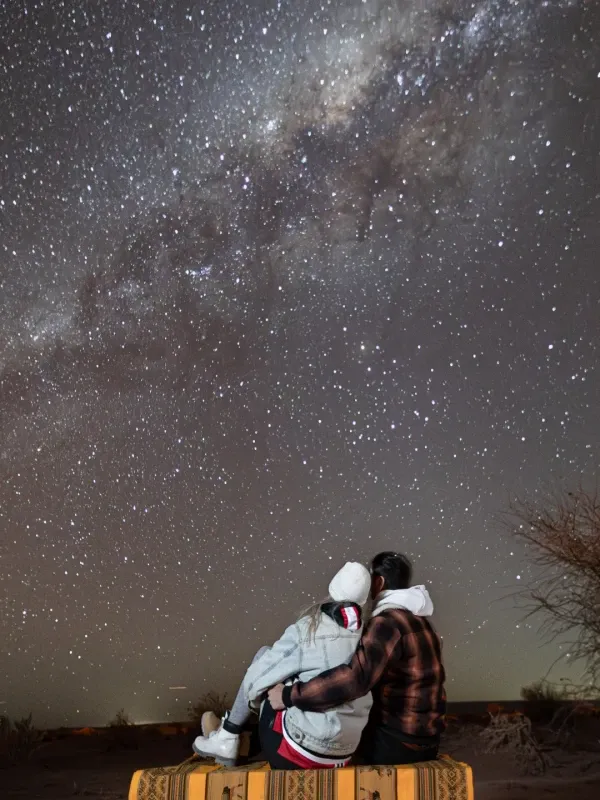
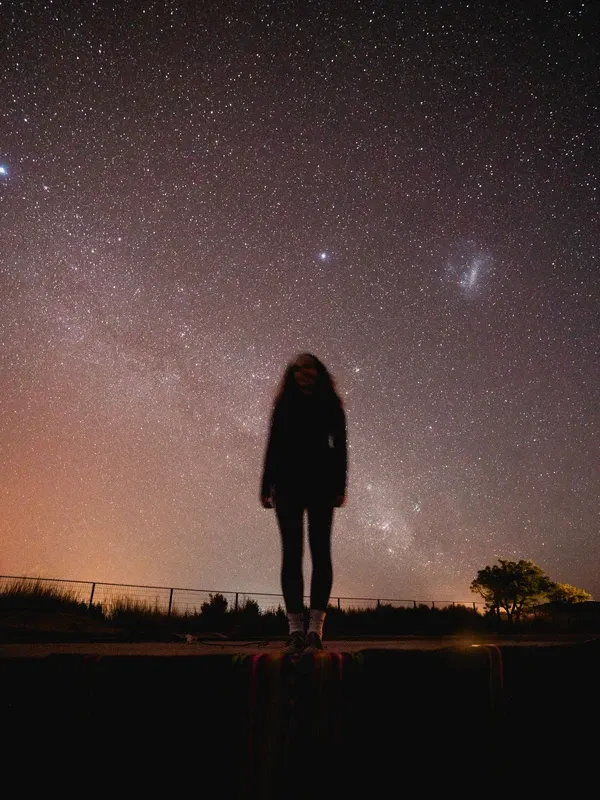
Atacama Desert stargazing tours offer a mesmerizing journey into the cosmos from the driest non-polar place on Earth. Thanks to its high altitude, minimal light pollution, and more than 300 clear nights a year, you will experience some of the most breathtaking views of the southern hemisphere's night sky.
View deep-space objects, planets, and distant galaxies up close using high-powered, motorized 14-inch to 16-inch telescopes.
Stand under the brilliant Milky Way while a professional photographer captures a high-resolution digital souvenir photo of you.
Learn how ancient indigenous cultures, like the Lican Antai, interpreted the constellations and the dark rifts of the Milky Way.
Stay cozy in the freezing desert night with complimentary hot tea, coffee, wine, and local snacks provided by your guides.
Guides will teach you how to identify southern hemisphere constellations and star clusters without the need for any equipment.
Before heading out into the freezing desert night, here is everything you need to know about booking your Atacama astronomical tour to ensure a smooth and magical experience.
Most stargazing experiences are small-group guided tours lasting between 2 and 3 hours. There are also private options available if you want exclusive telescope time or a more romantic setting.
Always check the moon phase before booking. Tours are frequently restricted or entirely cancelled during the 3 days before and after a full moon, as the bright moonlight washes out the stars.
While daytime temperatures in San Pedro can hit 30°C, night tours can see temperatures plummet to -15°C. Heavy thermal jackets, gloves, and thick socks are absolutely mandatory.
Many operators offer hotel pickup, but they strictly exclude accommodations outside the main urban area of San Pedro de Atacama. If you are staying in nearby Ayllus (like Coyo or Quitor), you will need to meet at a central point.
Observation sites sit at around 2,400 meters above sea level. While not as extreme as the geysers, you should still acclimatize, drink plenty of water, and avoid alcohol beforehand to prevent altitude sickness.
Standard tours generally include round-trip transportation, bilingual guides, telescope access, hot drinks, and at least one professional astrophoto. Premium tours may include specialized photography and alcoholic beverages.
Weather in the desert is usually clear, but clouds can roll in. Almost all tour operators offer a full refund if you cancel at least 24 hours before the scheduled departure time.
| Standard Stargazing Tour | Astrophotography Experience | Premium Small-Group Tour | |
|---|---|---|---|
| Duration | 2.5 hours | 2.5 - 3 hours | 2.5 hours |
| Best for | Budget travelers & beginners | Couples & photo enthusiasts | Astronomy buffs |
| Includes | Telescope viewing, hot drinks, 1 digital photo | Multiple high-res photos, snacks, wine, telescope access | 16-inch telescopes, deep-space viewing, brunch/snacks, hotel pickup |
| Price from | $30 USD | $42 USD | $64 USD |
Astronomical tours operate exclusively at night, with departure times shifting throughout the year depending on when the sun sets. You can generally expect pickups to begin between 8:00 PM and 10:00 PM.
If you are visiting daytime attractions, note their strict schedules: Valle de la Luna is open 08:30-16:00 for cars (08:00-11:00 for bikes), Laguna Chaxa runs 07:00-18:00, and the El Tatio Geysers are open 06:00-17:00.
San Pedro de Atacama is the hub for all tours. The most common route is taking a 3-hour flight from Santiago (SCL) to Calama (CJC), followed by a 1.5-hour shared shuttle (approx. 80,000 CLP total) directly to San Pedro.
The absolute best months to visit are March to May and September to November. During these shoulder seasons, temperatures are milder, and the crowds are thinner.
Avoid January and February if possible. This period brings the 'Altiplanic Winter,' a weather phenomenon where moisture from the Amazon causes rare but intense thunderstorms, heavy rains, and flash floods that can close roads and cancel tours. For stargazing specifically, avoid the 3 days before and after a full moon.
The desert terrain is inherently challenging due to sandy, uneven ground and extreme altitudes. However, specialized agencies like 'Wheel the World' provide adapted vans and equipment for wheelchair users.
For the elderly, the high altitude (ranging from 2,400m in town to over 4,300m at the geysers) poses a significant risk of altitude sickness (soroche). Pregnant travelers and those with cardiovascular or spinal issues are often advised against joining certain bumpy, remote tours. Infants are generally required to sit on an adult's lap during transit.
San Pedro de Atacama is a rustic adobe village. While there are several ATMs on Caracoles Street, they frequently run out of cash during weekends and peak seasons, so bring backup Chilean Pesos (CLP).
Important Health Note: The tap water in San Pedro is not safe to drink due to high levels of naturally occurring arsenic and heavy minerals. Only consume bottled or filtered water.
Out on the astronomical tours, facilities vary. Premium tours often provide a W.C. at their private observation sites, while budget tours venturing into open desert may not have bathroom access.
Strict environmental protection laws apply throughout the Atacama region to preserve its fragile salt crusts and archaeological sites.
Stargazing tours are often cancelled or severely limited during the 3 days before and after a full moon. The bright moonlight washes out the stars, making it impossible to see the Milky Way or deep-space objects clearly.
You must dress in heavy thermal layers. Even if daytime temperatures reach 30°C, the desert temperature can drop to -15°C at night. Wear a thick jacket, gloves, a beanie, and warm socks.
Most tours include pickup from accommodations within the central urban area of San Pedro de Atacama. If you are staying in the outskirts or surrounding Ayllus (like Coyo, Quitor, or Tulor), you will need to meet at a designated central point.
Yes, San Pedro de Atacama sits at 2,400 meters above sea level. To prevent altitude sickness (soroche), acclimatize for 48 hours, drink 3-4 liters of water daily, and avoid alcohol before your tours.
No, the tap water contains high levels of naturally occurring arsenic and minerals. You should only consume bottled or filtered water during your stay.
Yes, children are generally allowed, and infants can often sit on a lap. However, due to the extreme cold and late hours, some operators recommend the experience only for children over 7 years old.
The Altiplanic Winter occurs in January and February when moisture from the Amazon brings rare but intense thunderstorms to the desert. This can cause flash floods, road closures, and tour cancellations.
Yes, the ALMA observatory offers free public tours on Saturdays and Sundays. However, because it is the world's largest land-based observatory, tickets must be booked online 2 to 3 months in advance.
No, you don't need your own equipment. Almost all astronomical tours include a professional astrophotographer who will take high-resolution digital photos of you under the night sky.
Generally, no. The extreme aridity and freezing nighttime temperatures keep mosquitoes away, though you might encounter a few near river oases or hot springs during the day.
Browse verified tours with free cancellation and instant confirmation.
Find Tours


A short drive from San Pedro de Atacama brings you away from the town's lights to a quiet spot in the desert. This small-group tour uses two 16-inch telescopes to view the stars, nebulae, and star clusters visible in the southern hemisphere. Your guide explains the science and history of the cosmos, making astronomical concepts easy to understand. During the observation session, you can relax with a glass of wine, hot chocolate, or tea, along with snacks. Blankets are provided to keep you warm in the desert night. The experience also includes a professional photograph of each guest under the stars to take home as a souvenir.
For a full refund, cancel at least 24 hours before the scheduled departure time.
Portuguese, English, Spanish


We host guided stargazing sessions in the Atacama Desert that combine visual observation with historical storytelling. Instead of focusing solely on technical data, we use naked-eye viewing and automatic telescopes to help you navigate the constellations and deep-space objects visible from one of the darkest places on Earth. The experience includes a professional astrophotography session and a dedicated break featuring hot drinks, premium reserve wines, and a variety of snacks. We finish the night around a campfire in a private, natural setting designed to be free from light pollution and noise. This is an unhurried tour where you can observe the sky at your own pace in a comfortable, quiet environment.
For a full refund, cancel at least 24 hours before the scheduled departure time.
English, Spanish


Spend the night under the exceptionally clear skies of San Pedro de Atacama. The tour begins with a guided introduction to the constellations using the naked eye, followed by a detailed look at deep-sky objects through our telescopes. Each guest receives a digital souvenir photo with the stars or Milky Way as a backdrop. We provide blankets for the cold, along with snacks and a selection of drinks including hot coffee, tea, chocolate, red wine, and pisco sour. Please note that there are no bathroom facilities at the observation site. Observation conditions vary during full moon cycles. Upcoming full moon weeks include: April 26 – May 4, May 27 – June 3, June 25 – July 2, July 25 – July 31, and August 24 – August 29.
For a full refund, cancel at least 24 hours before the scheduled departure time.
English


The Atacama Desert provides some of the best conditions for astronomy on Earth due to its high altitude and lack of light pollution. During this tour, you will use both computerized and manual telescopes to see planets, star clusters, and distant galaxies. These tools allow you to see the specific colors and shapes of celestial bodies that aren't visible to the naked eye. A specialized guide leads the session, using a high-powered laser pointer to point out the major constellations of the Southern Hemisphere. The talk is designed to be informative and easy to understand for everyone, regardless of their prior knowledge. To make the night more comfortable, we provide food and drinks for you to enjoy while you observe the stars.
For a full refund, cancel at least 24 hours before the scheduled departure time.
Portuguese, English, French, Spanish


Join us for an evening of stargazing under some of the world's clearest skies. Away from the glare of city lights, you will have the chance to observe planets, constellations, and distant galaxies. Our guides will help you navigate the night sky, explaining what makes this specific location one of the best on Earth for astronomy. As part of the experience, we include a professional night-sky portrait. A photographer will take a high-resolution photo of you with the Milky Way visible in the background, providing a lasting record of your time under the stars. The session is focused on providing a clear, informative look at the universe in a relaxed setting.
For a full refund, cancel at least 24 hours before the scheduled departure time.
English, Spanish


Escape the lights of San Pedro with a 15-minute drive into the Atacama Desert. This tour takes you to a secluded spot where the sky is exceptionally dark and quiet, providing ideal conditions for stargazing. The night begins with an introduction to the southern hemisphere's constellations and celestial landmarks. You will use high-end telescopes to observe between 8 and 10 deep-sky objects, such as distant nebulae and galaxies, while a guide explains the science behind what you are seeing. During the session, a professional photographer will take a high-resolution panoramic photo of you under the Milky Way. The evening concludes with a snack and a wine cocktail, allowing time to relax before the return trip.
For a full refund, cancel at least 24 hours before the scheduled departure time.
English, Spanish


Located in the historic first settlement of the Atacama people, this tour provides a quiet environment far from the noise and light pollution of the town center. The experience combines ancient Andean perspectives on the cosmos with modern technology, taking place under some of the clearest and most privileged night skies in the world. Guided by experts, you will begin with a naked-eye observation to learn how to identify the constellations. The session then moves to professional-grade telescopes for a closer look at deep-space objects. To conclude the evening, the team takes a digital group photograph under the stars so you can take a high-quality memory of the experience home with you.
For a full refund, cancel at least 24 hours before the scheduled departure time.
English, Spanish


This guided tour takes you into the Atacama Desert to observe one of the world's clearest night skies. You will view planets and constellations through professional telescopes while learning how ancestral cultures interpreted the stars. To stay comfortable during the observation, we provide traditional Andean ponchos and serve a selection of local food. The tour includes round-trip transport from San Pedro de Atacama and is open to travelers aged seven and older. Because desert nights are exceptionally cold, we recommend dressing in at least three layers of warm clothing. The experience focuses on providing a clear, educational view of the cosmos in a small-group setting.
For a full refund, cancel at least 24 hours before the scheduled departure time.
Portuguese, English, Spanish


This tour is structured into three distinct stages. It begins with an introduction to the Andean worldview, explaining how local cultures have historically interpreted the night sky. This is followed by a telescope observation session, where you can view planets and celestial details that are not visible to the naked eye. The experience concludes with a professional photo session. We use full-frame cameras equipped with specialized lenses and technical adaptations designed specifically for portrait and landscape astrophotography to capture high-quality images of you under the stars.
For a full refund, cancel at least 24 hours before the scheduled departure time.
Portuguese, English, Spanish


Take a short drive from San Pedro to a private observation site 2,400 meters above sea level to view one of the world's clearest night skies. Led by a bilingual guide, you will use professional telescopes to identify constellations, star clusters, and distant galaxies based on their seasonal positions. The two-hour experience includes a cocktail and snacks served under the Milky Way, along with two professional photographs to document the night. In accordance with Chilean law, alcoholic beverages are reserved for guests aged 18 and older, with non-alcoholic alternatives provided for minors.
For a full refund, cancel at least 24 hours before the scheduled departure time.
Portuguese, English, Spanish